HOME        |        ABOUT        |        COPYRIGHT        |        CONTACT        |         RECIPE INDEX        |         INDIAN THAALIS        |         MILLET RECIPES        |        EVENTS' ROUNDUP        

Showing posts with label Potato. Show all posts

Tuesday, January 11, 2022

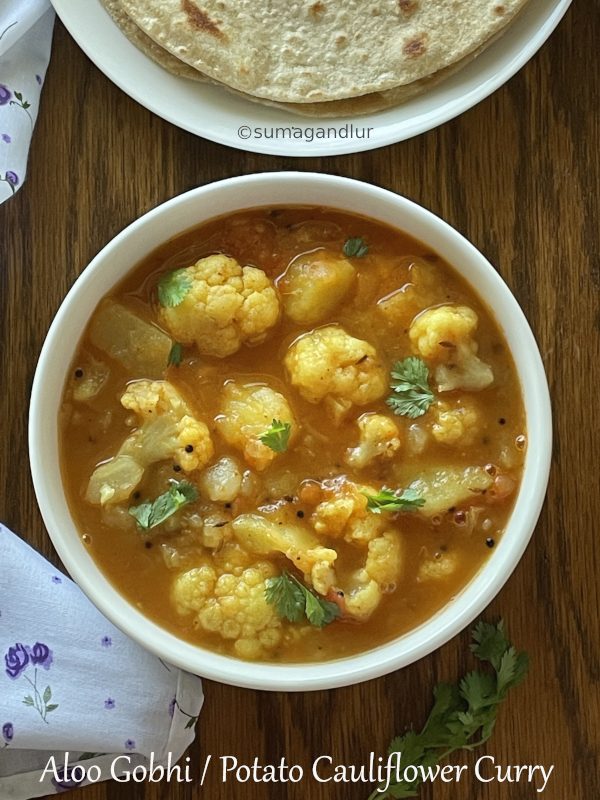
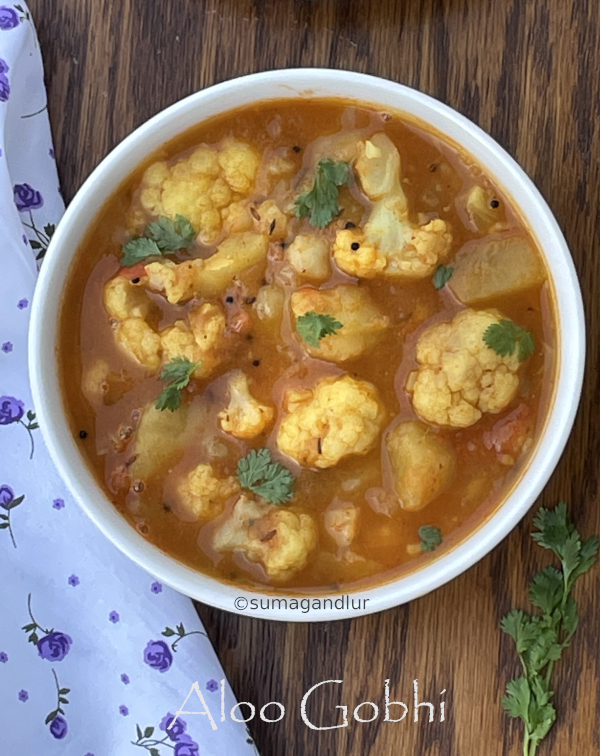
Aloo Gobhi / North Indian Style Potato & Cauliflower Curry
 (Originally published on 2/23/2011)

Aloo gobhi is a delicious, home style vegetable preparation from North India that has become popular through out the Indian subcontinent. In fact, it is so popular that it has made its way into the Indian restaurants everywhere. This is reflected in the fact that it is one of the mandatory side dishes you will find on any Indian restaurant menu in the western hemisphere and an equally ubiquitous one even in our blog world. :) Simple enough in terms of preparation even to a novice cook and palate pleasing, it's no surprise that aloo gobhi is a favorite to many.

There are no hard and fast rules when it comes to aloo gobhi preparation. It can be prepared dry or with some gravy clinging to potato - cauliflower mixture. Onions & / tomatoes can be added or omitted. It can be prepared according to one's taste preference and here is my version of our favorite "aloo gobhi".

Ingredients: (Yield - 4 servings)
1 big sized onion (about 1/2 cup chopped)
2 tomatoes (1 cup chopped)
1 small sized cauliflower (2 cups florets after the leaves and hard parts removed)
3 medium sized potatoes (2 cups peeled & cubed potatoes)
1 tsp grated ginger
1 tbsp. oil
1 tsp cumin seeds
1/8 tsp. turmeric powder
1 tsp. coriander powder
1 tsp. chili powder
1/2 tsp. garam masala
Salt to taste
Minced cilantro to garnish
Directions:
* Heat oil in a kadai / pan and add grated ginger and cumin seeds to it. Add turmeric powder and chopped onions when they slightly brown. Cook them covered until they turn translucent. 
* Next add the tomatoes and cook until they turn slightly mush.
* Add potato cubes and about a cup of water and. Continue to cook until potatoes are 3/4th done. 
* Add the cauliflower florets and salt. Add some more water if needed. When the cauliflower turn almost tender, add chili powder, coriander powder and garam masala to it and mix well. Mash  cooked potatoes cubes slightly without mashing cauliflower. Simmer the curry for a couple of minutes more and turn off the stove. Garnish with cilantro. (I add cauliflower almost at the end as cauliflower gets cooked in about 5 to 6 minutes and softens furthen even after turning off the stove.) 
* Serve the curry warm with some hot roti / phulka and yogurt for a complete meal.

This is going to be my contribution to this week's Blogging marathon, with the theme 'Winter Produce'. Check the page link to see what other marathoners are cooking.


Thursday, November 25, 2021

Barley Khichdi / Spicy Barley - Lentil Stew

(This was originally published on 3/13/2011.)

When trying out new grains and that too when I am not sure how well our palates are going to receive the new textures, I prefer to go back to my own cuisine to borrow ideas. The south Indian cuisine, the familiar zone seems so comforting and forgiving like a mother. When I have to deal with the unfamiliar grains for the first time, I prefer to combine the typical ingredients used in my (south Indian) kitchen and add spices for more layers of flavor. This barley dish is a proof of it.

Though barley is available in India, it was never used in my mother's or any relatives' kitchens. I used barley for the first time when I prepared this barley - raisin bread. The barley I have been left with has gone in to the preparation of typical Indian style dishes.

Barley has a chewy texture when cooked that I am not very fond of. I have therefore allowed the barley to cook until it reached a fall apart stage, where you don't feel its texture at all. As I mentioned above, this dish relies on South Indian style cooking and is somewhat a cross between Karnataka's Bisibelebhath and Tamilnadu's Kadamba Saadam. I simply called it a khichdi since I didn't want to wreck my brains in search of a perfect name for this dish. This was a wholesome, healthy and hearty meal that was liked by everyone at our home.

 Ingredients: (Yield - 4 servings)
1/2 cup barley
1/2 cup pigeon peas / toordal
1 cup chopped mixed veggies (I used carrots, green beans, potatoes, peas)
A pinch of ground turmeric 
Salt to taste
2 to 3 tbsp. thick tamarind juice (extracted by soaking about lemon sized tamarind in water) 
Ingredients for seasoning:
2 tsp. ghee / oil
1 tsp. mustard seeds
A sprig of curry leaves
Ingredients for spice powder:
2 tbsp. split chickpeas / bengal gram / chanadal
1 tbsp. skinned black gram / uraddal
1 tbsp. coriander seeds
1/4. tsp fenugreek seeds / methi seeds, 
6 - 8  or to taste, dried red chilies, 
2 tbsp. grated dry coconut 
3 - 4 black stone flower / dagad phool / rathi puvvu

Directions:
* Soak barley for at least an hour and this step is optional if you are using a pressure cooker. 
* Add barley, lentils, vegetables, turmeric powder and about 2 cups of water to a pressure cooker and cook until done. If you cook rice for 3 whistles, then let this go for 12 - 15 whistles.
* Meanwhile, add split chickpeas and skinned black gram to a small pan and dry toast them on medium flame. Continuously stir them , until they start to change the color. Transfer them onto a plate. Next add coriander seeds, fenugreek seeds, red chilis and stone flower to the same pan and dry toast them on low flame until coriander seeds start to change a shade darker. Add the coconut and turn off the stove. Transfer them on to the plate. Once cool, grind them finely. 
* When the cooker's valve pressure is gone, remove the container, and check the barley consistency. If you wish to cook it further, add the mixture to a pan. Add water as needed and cook further until the desired consistency is reached. Also if you prefer your veggies crunchier, you can cook them separately instead of adding them to the pressure cooker.
* Add salt, tamarind puree and the spice powder to the barley mixture. Taste and adjust the seasonings if needed. Simmer the mixture for a couple of minutes more.
* Heat the ghee / oil in a pan. Toast the mustard seeds and curry leaves and add to the barley mixture.

Friday, September 17, 2021

Bihari Ghugni / Bihari Aloo Chana

I had prepared this delicious and nutritious ghugni as part of the Bihari thaali I posted a while ago. Ghugni happens to be a popular dish in Bihar and as well as in some of the neighboring states such as Asaam, Bengal and Odisha where it is enjoyed as a snack. The preparation of course varies from region to region. This spicy ghugni when made into a gravy, can be served as a side dish to go with roti, poori or even rice whereas the street version usually happens to be a dry one. Ghugni can also be prepared using white chickpeas, dried yellow peas or split chickpeas.

The onion and tomato mixture can be cooked directly in a pressure cooker and soaked chickpeas and potatoes can then be added and pressure cooked. For a quicker version, I cooked chick peas and potatoes individually and added to the cooked onion - tomato mixture that got cooked in a pan at the end.
Ingredients:
1.5 soaked and cooked black chick peas / kala chana
2 potatoes, peeled and cubed (About a cup)
1 tbsp. mustard oil, preferably for authentic taste
1/2 tsp. cumin seeds
1 bay leaf
2 green chili, sliced lengthwise
2 onions, chopped fine
2 garlic cloves, finely chopped / 1/4 tsp. garlic paste (I omitted it.)
1/2 inch ginger, finely grated / 1/4 tsp. ginger paste
1 big sized tomato, finely chopped
1/4 tsp. turmeric powder
Salt to taste
1/2 tsp. red chili powder
1/2 tsp. cumin powder
1 tsp. coriander powder
1 tsp. chole masala
1/2 tsp. garam masala

Directions:
* Soak chickpeas overnight or at least 8 hours with adequate water to soak. Let the container be big enough to hold the chickpeas which expand while soaking. Drain the water used to soak and pressure cook the chickpeas adding water as needed. 
* Cook the potatoes until tender and keep aside.
* Heat oil in a pan and add cumin seeds and bay leaf.  Immediately add green chili, onion and grated ginger. Sauté until onions turn golden brown. 
* Next add the tomatoes and cook until they turn mush. Add turmeric, salt, red chili powder, cumin and coriander powder, garam masala and chole masala. Cook for a minute.
* Add cooked chickpeas and cooked potato cubes and simmer for about five minutes. Mash some of the potatoes if the gravy needs to be thicker.
* Serve it with Indian style breads / rice.

This post is an entry for Blogging Marathon under the theme 'Regional Side dishes'. Check the link to find out what other marathoners are cooking.

Sunday, September 5, 2021

Dahi Aloo ~ Potatoes in Spicy Yogurt Gravy

 
Today's recipe 'dahi aloo' is a quick and easy side dish that has it's roots in the North Indian cuisine. As the name indicates, the two main ingredients of this recipe are dahi and aloo which are yogurt and potatoes and the rest of the ingredients used are a few spices / spice powders, which are all staples of an Indian kitchen. The dish can be cooked under 15 minutes if one has cooked potatoes handy.  

Dahi aloo is prepared in the north Indian states with minor variations. The preparation is along similar lines of a 'kadhi' sans chickpea flour. Using onions and tomatoes in the dish is optional. Garam masala / kasuri methi can be added as well for flavoring if preferred. The cooked potatoes are roughly mashed and used in the recipe. The potatoes are neither completely mashed into a mush nor cooked as in a potato fry recipe. The whisked yogurt along with spices is added and cooked on a low heat setting. The flavors used in the recipe are quite basic ones and this dish is a perfect example of  a 'home cooked meal' where simple flavors shine through. 

Use yogurt which is slightly on the sour side or add some amchur / lemon juice to the dish for some tanginess. One of the things to keep in mind while cooking dahi aloo is not to curdle the yogurt. Avoid adding yogurt to the hot pot since chances of it curdling are high if done so. Whisking a tsp. of chickpea flour / rice flour / corn starch, along with yogurt also helps. I have added some tips in the recipe directions below, that I use to avoid curdling yogurt when making these kind of dishes.

Ingredients: (yield 2 servings)
2 big potatoes / 4 small ones
2 tsp. ghee / oil
1 tsp minced / grated ginger
1 green chili, finely chopped
A pinch of asafoetida
1/2 cup yogurt 
1 cup or slightly more water
1 tsp. chickpea flour / besan
Salt to taste
1/8 tsp. turmeric powder
1/2 tsp. coriander powder to taste
1/4 tsp. chili powder or to taste
Minced cilantro to garnish

Directions:
* Peel and cut potatoes into big cubes. Pressure cook them for 2 or 3 whistles adding enough water. Or alternatively, they can be cooked in a pot on stove top or in a microwave until fork tender. Add the potatoes to a colander and drain. Run cold water over them. (I do this to keep everything at room temperature when adding the yogurt to avoid it from curdling.)
* Add ghee / oil to a pan and heat it. Don't bring it to a smoking point. Add cumin seeds and when they start to brown, add chilies and ginger. Saute for 30 to 40 seconds and add asafoetida powder. Stir well once and turn off the stove. 
* Transfer the pan to another burner which is not hot or place on a trivet and add the cold, drained potatoes and 1/4 cup water to it. It is to make sure that the pan is not hot while adding the yogurt to it. 
* Whisk yogurt, remaining water and chickpea flour together. (I use a blender for a homogeneous mixture.) 
* Now add yogurt mixture, salt, turmeric, coriander powder to the pan. Stir well and taste. Next add chili powder as needed.
* Turn on the heat and put the pan on stove. Cook on low flame, stirring quite often. If the heat used to cook is high, the yogurt mixture starts to curdle. Cook until the mixture slightly thickens, about 10 - 12 minutes. Taste and cook longer if needed.  Also note that the mixture thickens slightly after cooling.
* Garnish with chopped cilantro and serve hot with rotis / pooris / rice.

bmlogo
This post is an entry for Blogging Marathon and check what other marathoners are cooking, clicking at the link.

Comments

Saturday, July 3, 2021

Aloo Raita / Indian Potato Yogurt Dip

Potato is one of the limited vegetables that is allowed during fasting in some parts of India. Plantain, sweet potato, colocasia, bottle gourd, pumpkin, cucumber, raw papaya and yam are the other ones. Fruits, dairy products and a few spices are allowed as well. I made this quick and nutritious raita using aloo / potato and other allowed 'vrat' ingredients.

Freshly made, full fat yogurt is what used in raita preparations but I went with fat-free yogurt as that is what eaten at our home. Sendha namak / saindhava lavanam / rock salt is used instead of regular salt during fasting in some parts of India and that is what I have used in this raita. Regular salt can be added if not following the fasting diet. 

The raita can be made just with the base recipe I mentioned below, without adding any optional ingredients, the one which I personally prefer. Cumin powder and black pepper are 'allowed' during fasting and I have added those as well to my raita bowl as my husband absolutely loves them. 

My husband always sprinkles chili powder, black salt and chaat masala to any raita I make and he enjoyed this raita adding those to his portion. Some consume these spice powders and some don't while fasting and so they can be added accordingly. I personally don't prefer that much of spices in my raita and omit them. 

Ingredients:
1 cup peeled and cubed potato cubes
1 tsp. oil
1/2 tsp. cumin seeds
1 spicy green chili, finely chopped
1 cup yogurt (I used homemade fat-free yogurt.)
Sendha namak / rock salt to taste or use regular salt
1 tsp. grated ginger
Minced cilantro to garnish

Optional ingredients that can be added if fasting:
1/2 tsp. toasted and ground cumin 
Ground black pepper to taste 

Optional ingredients that can be added if not fasting:
Chili powder
Black salt 
Chaat masala 

Directions:
* Cook potatoes adding water as needed, in a microwave or on stove-top until done. Drain them and keep aside. Mash the potato when they come to room temperature.
* Heat oil in a small pan and add cumin seeds. When they start to change color, add green chillies and sauté for 20 to 30 seconds and turn off the stove.
* Add yogurt and sendha namak / rock salt to a bowl. (Use regular salt if not fasting.) Beat the yogurt with a spoon for a smooth consistency.
* Add the mashed potatoes, cumin -green chili tadka, grated ginger and minced cilantro to the bowl. Mix them with a spoon to combine. (One can certainly stop at this point and serve this.)
* Add ground cumin and black pepper if preferred and stir to combine. (These are allowed during fasting.)
* Chili powder, black salt and chaat masala are other flavorful additions that can be used if not fasting. (Some eat these spice powders as well during fasting and so need to be used accordingly. I added these spice powders to a portion of raita which is not pictured here.) 
* Serve this with 'allowed breads' during fasting like parathas made with amaranth flour, water chestnut flour or barnyard millet pulao and such.
This post is an entry for Blogging Marathon and check the link to find out what other marathoners are cooking.

Wednesday, May 26, 2021

Aloo Allam Pachimirchi Koora ~ Andhra Style Spicy Potato Curry

This aloo allam pachimirchi koora is a traditional, spicy potato preparation from Andhra. This tasty curry used to be the most common potato preparation in our home while growing up as we loved it. A ground paste of green chillies and ginger flavor the curry while a little squeeze of a lemon at the end perks up the curry. Soaked and squeezed tamarind paste can be used in lieu of lemon. 

This simple preparation is a 'no onion/garlic' curry and can be included in festive menu as well. Plantains, elephant yam (kanda gadda), taro root (chama gadda) and even eggplants can be prepared in a similar manner. Plantains or eggplants prepared in this fashion used to be a fixture on wedding menus as well, my mother mentions.

Traditionally chilis, ginger and rock salt were ground together in a stone grinder without adding any water. A food processor / blender can be used for the same. Grind more chilis than needed if not sure about their potency. Taste the curry and use only as much as needed. (The Serrano peppers I use are super hot and so, I used only a long one.)

Ingredients: (4 servings)
3 potatoes (2 cups cooked potato cubes)
A pinch of turmeric powder
1/2 inch piece of ginger 
1 big spicy serrano pepper or any green chili as needed
1 to 2 tbsp. oil 
1 tsp. split peas / chana dal
1 tsp. skinned black gram / urad dal
1/2 tsp. mustard seeds
A sprig of curry leaves
Salt to taste
1 tsp. lemon juice or to taste

Directions:
* Peel and cube the potatoes. Pressure cook them for 2 or 3 whistles adding turmeric and enough water. (Or the potatoes can be scrubbed, cut into halves, cooked and then peeled.) Let the potatoes cool, mash them and keep aside. A few chunks of potatoes here and there is fine.
* Coarsely grind the green chili and ginger without adding any water. 
* Heat oil in a pan on medium flame and add split peas, black gram and mustard seeds. When split peas and black gram start to turn brownish, add curry leaves and stir once.
* Next add ground ginger - chili and stir for few seconds.
* Then add mashed potatoes, and salt and mix well. Cook for a couple of minutes and turn off the stove. 
* Add lemon juice to suit your taste and stir to combine. (In absence of lemon, tamarind can be used.)
* Serve warm with rice and a drizzle of ghee.

bmlogo

This post is an entry for Blogging Marathon with the theme 'Dry Side Dishes'. Check the link to find out what other marathoners are cooking.

Comment

Tuesday, May 25, 2021

Kumror Chokka ~ Bengali Potato - Pumpkin Curry

Kumror chokka is a simple vegetarian side dish prepared braising chunks of sweet pumpkin and potatoes, with some black chickpeas thrown in. I had included this in my Bengali lunch thaali that I had posted a few months back. This 'no onion or garlic' dish is popular in Bengali households and used to be a fixture on wedding menus until a few decades ago. Panch phoran, the blend of mustard seeds, cumin seeds, fenugreek seeds, nigella seeds and fennel seeds is used in tempering. The addition of bhaja masala, a local spice blend and ghee make the simply curry a flavorful one. This dish pairs well with luchi / rotis. 

Recipe source: Here
Ingredients:
A handful of black chickpeas, soaked overnight
1 big potato, peeled and cubed
1.5 to 2 cups cubed pumpkin
2 tsp. mustard oil or oil of your choice
1 tsp. panch phoran / Bengali five spices
1 red chili
1 bay leaf
A pinch of asafoetida
1 tsp. grated ginger / 1/2 tsp. ginger paste
Salt to taste
A pinch of turmeric powder
1/4 tsp. chili powder or to taste
1/4 - 1/2 tsp. sugar
1/2 tsp. bhaja masala
2 tsp. ghee
Directions:
* Soak black chickpeas / kala chana overnight and drain the water in the morning. Pressure cook adding water for 3 whistles and keep aside.
* Heat oil in a pan / kadai and temper with five spices, red chili, green chili and bay leaf.
* Next add asafoetida and ginger. Stir for few seconds and add potatoes. Cook them on low flame until they are more than half way done. Next add pumpkin, salt, turmeric, chili powder and the cooked black chickpeas to the pan. There is no need to add any water to the pan. 
* Cover and continue cooking until both the vegetables are done, still holding the shape. Stir in sugar.
* Finally stir in bhaja masala and ghee and turn off the stove.

* Serve it warm with luchi / roti or parathas.

bmlogo

This post is an entry for Blogging Marathon with the theme 'Dry Side Dishes'. Check the link to find out what other marathoners are cooking.

Comment

Tuesday, November 10, 2020

Raswaale Aloo / Banarasi Aloo

This potato curry aka raswaale aloo is part of the classic combo that is served along with dalwaali kachori in the lanes of Banaras. This gravy and the Sitaphal ki subzi / Kaddu ki subzi together make an unusual and lip smacking combination to go with Banarasi dalwaali kachori, the spicy pooris made with wheat flour and black gram paste. 

It is an extremely easy and simple curry which needs minimal cooking skills and basic ingredients that can be found in any Indian kitchen. This curry falls under 'satvik food' category as it is made with just potatoes using no onion, garlic or tomatoes that are usually an integral part of the north Indian style curries. The curry can be paired with roti / poori or paratha too.

Recipe Source: Here
Ingredients:
3 potatoes, peeled and boiled 
2 tsp. mustard oil / any oil preferred
1 tsp. mustard seeds
A pinch of asafoetida
1 tsp. ginger paste
1/8 tsp. turmeric powder
1 tsp. cumin powder
1 tsp. coriander powder
2 tsp. dried mango powder / amchur powder (or to taste)
Chili powder to taste
1/2 tsp. black pepper powder or to taste
Salt to taste
Cilantro to garnish
Directions:
* Add ginger paste, turmeric, cumin powder, coriander powder, dried mango powder, chili powder, pepper powder to a small bowl. Add 2 tbsp. of water to the mix and make a paste.
* Heat oil in a pan and add mustard seeds. When they start to splutter add asafoetida. Next add the spice powder paste and saute on low flame until the oil separates and floats to the surface.
* Crumble the cooked potatoes roughly with hand and add it to the pan. Mix the ingredients to combine, with a ladle.
* Add salt and pour about a cup of water to the pan. (More water can be added for a thinner gravy.) Bring the mixture to a boil. Smash the potatoes with the back of a ladle if needed.
* Garnish with cilantro if preferred and turn off the stove. 

Monday, September 14, 2020

Bihari Thaali ~ Aloo Bhujiya Subzi

My second regional thaali is from Bihar and is more like a home cooked meal rather than restaurant style one. Bihar is one of the states in the eastern part of India and so their cooking is similar to their neighbors in Bengal and also north Indian cooking in general. Bihari cuisine includes Bhojpuri, Maithili and Magahi cuisines and my thaali includes Mithila dishes like taruva and shakrouri. Everyday meals include the standard rice, roti, dals, pickles and vegetable preparations similar to the neighboring states but the dishes keep changing seasonally. Use of mustard oil, the five spice blend panch phoran, milk products are common features of Bihari cuisine while dishes with garam masala are less common. Most dishes are steamed with a light seasoning. Biharis are famous for their kebabs while they have wide range of vegetarian cuisine. Some of the vegetarian dishes popular in the region are sattu ke parathe, litti chowka,  dal pitha, thekua, tarua, posta daana ka halwa, khurma, makhana kheer, lai, kasar, paan peda and others. (Some info from wiki)
I had a vague idea about what I am going to include in this thaali  as my husband had lived about a year or so in Ranchi long back. Sattu ke parathe, aloo bhujiya, lauki chana dal, ghugni, chowka were a given. The rest came into thaali after I watched several Bihari recipes on YouTube which also included a thaali meal from the Mithila region. The woman cooks traditional food from her humble kitchen and I appreciate her daughter's efforts to showcase her mom's culinary expertise virtually. I literally recreated her sattu ke parathe, tharuve, tomato chutney, and the dessert shakrouri recipes in my kitchen. Sattu ke parathe and the chowka were match made in heaven. We very much enjoyed bhavra and tharuve that I have made the latter two more times. Shakrouri was a delight to my sweet tooth. Now I know what to do when I have leftover laddus.

My Bihari thaali menu is below.

Salad:
Cucumber slices
Rice and Bread:
Rice 
Sattu ke parathe - Flatbreads stuffed with sattu, roasted and ground Bengal gram
Dal and Curries:
Aloo Bhujiya - Dry potato saute 
Ghugni - Black chickpea curry
Lauki Chane dal - Bottle gourd and split chickpea dal (Recipe is here.)
Snacks
Kele ke tharuva - Crisp, fried plantains (Recipe here )
Bhavra - Black garbanzo bean fritters
Accompaniments:
Chowka
Tamatar ki chutney - Tomato chutney
Raita - Yogurt sauce
Sweet:
Shakrouri - Boondi kheer


I decided to post a simple recipe for Aloo bhujiya today as I did not take step by step pictures for this particular one. The aoo bhujiya I am referring to here is not the savory snack / the fried chickpea noodles but is a dry potato saute popular in Bihar and Uttar Pradesh states. It is a simple stir fry cooked in mustard oil, and flavored just with cumin seeds and red chillies. No garlic - ginger paste or special spice blends are needed here. The potatoes are cut into strips and cooked in mustard oil which is the cooking medium in Bihari cuisine, which lends it's signature flavor. We are not fans of mustard oil and so I used olive oil here but use mustard oil if you can. I did not cook the potatoes to a point of roasting or lightly browning them as some of the online recipes suggested. I cooked them until they were done as my husband remembers the subzi.

Ingredients:
3 / 4 potatoes
1 to 2 tbsp. mustard oil (or oil of your choice)
1 tsp. cumin seeds
3 red chillies or to taste, broken into bits
2 pinches of ground turmeric
Salt to taste

Directions:
* Peel the potatoes and cut into strips like you do for French fries. 
* Heat oil in a non stick pan until it almost reaches smoking point if using mustard oil. Add cumin seeds and red chillies. When the cumin and chilies start to turn a shade darker, add potatoes and turmeric. Stir once, cover and cook on low medium flame until they are done, stirring gently now and then. 
* They can be fried more until they turn a little crisp and brown, if desired. Add salt finally, give it a mix and cook for few seconds more. Turn off the stove and serve warm with rice / rotis.

Comments

Wednesday, August 19, 2020

Aloo Methi / Urla Gadda - Menthaku Koora / Potato - Fenugreek Greens Dry Saute


(This was originally posted on 6/14/2007.)

Methi / fenugreek leaves would go into either dals or parathas or the menthya bhath recipe while growing up. The first time I ever had methi subji was at a friend's home about two decades ago when she served it at a party. I thoroughly enjoyed it and after that, this dish has been a regular one on our menu at home.

I really love fenugreek greens aka methi leaves which stand out in any dish with their assertive fragrance and flavor. What happens if those healthy greens are combined with universally loved potatoes? Of course, you will end up with a scrumptious subji/ curry that goes well with rotis / rice and here is the recipe for the mouth watering aloo - methi.


Ingredients needed:
2 cups peeled and cubed potatoes 
2 cups fenugreek leaves / meth
2 tbsp. oil
1/2 tsp. cumin seeds
1 tsp. mustard seeds
1/8 tsp. turmeric powder
Salt to taste
Chili powder to taste


Method:
* Pluck the leaves from methi stems and wash them thoroughly to remove the dirt. Chop them roughly. If you do not wish to peel the potatoes, then wash them and chop into cubes.
* Heat oil in a pan, preferably a non stick pan and add mustard and cumin seeds to it. When mustard seeds start to crackle and cumin seeds start to get brown, add turmeric powder and methi leaves and saute for a few minutes until the methi leaves collapse. Now add potato cubes and salt to the pan and stir thoroughly once. (Adding salt will help to release water which helps the potatoes not stick to pan if not using a non stick pan.)
* Cover the pan and cook the potatoes till they are done, on low to medium heat. Keep stirring in between. If the potato - methi starts to stick to the pan or burn, sprinkle a little water, as required.
* When potatoes are cooked add chili powder and cook for a couple of minutes and turn off the stove. (Increase the heat setting if there is any extra water and stir until all the water is absorbed.)
* Serve hot with rice drizzling a little ghee or with rotis.


Comments

Tuesday, August 18, 2020

Saag Aloo / Aloo Palak ~ Potatoes in Spinach Gravy


 (This was originally posted on 6/30/2007.)

Saag Aloo / Aloo Palak is a tasty curry of chunky, diced potatoes in spinach gravy. This nutritious and vegetarian preparation is a Punjab specialty. This spicy and flavorful blend of creamy spinach and potato goes well with Indian rotis / tortillas. I have chosen to use whole potatoes in the dish instead of using diced ones. Also, frozen spinach can be used instead of fresh ones. The preparation is quite a simple one, though the ingredients list is longer.

Ingredients: (6 servings) 
2 tbsp. oil
1 tsp. cumin seeds
1 tsp. grated ginger / ginger paste
1/2 tsp. garlic paste (I didn't use any.)
2 pinches of asafoetida
12 small sized white potatoes / baby potatoes - 12
1 cup chopped cooked spinach 
1 cup chopped onion 
1 cup chopped tomato
1/8 tsp. ground turmeric
1 tsp. coriander powder
1/2 tsp. cumin powder 
1/2 tsp. chili powder or to taste
Salt to taste


Directions:
* Peel the potatoes and cook them in a pressure cooker with sufficient water for one whistle. If not using a cooker, cook them in water until they are fork tender. Keep them aside. Do not throw away the water used to cook the potatoes.
* Heat oil in a pan and add cumin seeds.When cumin seeds start to turn brown, add grated ginger and garlic if using. Saute for few seconds and add asafoetida and turmeric. 
* Add onion next, lower the heat setting and fry the onions till they turn brown. Then add tomatoes and cook until they are mushy. Add chili powder, cumin and coriander powders to the pan and fry for a minute.
* Puree the cooked spinach using water that was used to boil potatoes.
* Add the spinach puree, cooked potatoes and the required amount of salt to the onion - tomato mixture. Add some water if needed. Let the mixture simmer on low flame for about five minutes. Turn off the stove.
* Serve with rotis / pooris / tortillas.


Comments

Monday, August 17, 2020

A Simple Potato Curry


(This was originally posted on 12/21/2006.)
My husband comes from a big family and when we have family gatherings, our number would surpass 50 75. I lived for a short time with my in laws after my wedding and there would be almost 10 people around the food table, any given day. Cooking would be a huge chore, especially when all the siblings and their families visited. To my surprise, whenever the whole family gathered there would be a roti night instead of cooking a simple rice item. My mother in law would get a reprieve from the kitchen tasks and the rest of the women would take turns in making rotis and curries. I remember that we always ended up going for a second packet of flour after finishing a three kilo packet of wheat flour for our roti making. And also Thursday dinners would always be rotis as the elders did not eat rice that night. My sister in law was responsible for the dinner preparation on those days and I, who happened to be a novice cook then used to be her helper.

I am not sure whether my sister in law particularly liked this curry  or hated all the hassle and opted for this simple and delicious version. It did not involve a lot of chopping or toiling in front of the stove. Instead of cutting the vegetables into tiny bits (until our backs started complaining), she would chop them into big chunks and put them together in a wok adding some water and forget them for a while. At the end when they were done, she used to add some salt, chili powder and sambhar powder. Yep, sambhar powder. Anyway it used to be lip smacking and nobody had any complaints. The curry used to be watery but I mash a few potato pieces to make it like a thicker gravy. I cook this curry very rarely nowadays and slightly differently but a lot of nostalgia attached to it and is a easy and fuss-free one for novice cooks.

Ingredients:
1 tbsp. oil

1/2 tsp. mustard seeds
2 onions, sliced or diced  
2 tomatoes, chopped
1/8 tsp. turmeric powder
About 4 cups chopped and boiled potatoes

Salt to taste
Chili powder to taste
2 tbsp. sambhar powder or to taste (I used homemade one.)
1/2 tsp. sugar or to taste
Minced cilantro to garnish
(Imaginative and creative ones over there, you can always add whatever you wish).

Directions:
* Heat oil in a wok / pan on the stove and add mustard seeds. When they start to sizzle and splutter, add onion and cook until it is done. No need to brown. Next add tomatoes and cook until mushy and add turmeric powder. 
* At this point, boiled potatoes can be added if handy or add chopped potatoes and a cup of water. Cover and cook on low medium setting, until potatoes are fork tender. Check in between and add water if needed. 
* Add salt, chili powder, sambhar powder, and sugar to the pan and stir well. Mash some of the potato pieces with the back of the spoon and add extra water if needed. Taste and adjust the seasonings if needed. Let the mixture come to a boil and lower the heat. Simmer for a couple of minutes and turn off the stove.
* Garnish with minced cilantro leaves and serve warm with rotis / bread.

Monday, May 25, 2020

Potato Gulab Jamun

Sweet potato jamuns were on my mind when I picked 'sweets with vegetables' theme. However when the time came to cook, I had to work with whatever vegetables I had on hand when we decided to not venture out at all during the lock down period. I had about 20 pounds of potatoes and I therefore decided that one of the sweets would be potato based. I was wondering whether sweet potatoes can be replaced by potatoes in the jamun recipe and dear Google showed that in fact I can. 

I tried this recipe and surprisingly, potato based jamuns taste delicious and they didn't disappoint. It is hard to detect potatoes in the dish and they make a great substitute for the regular dairy based ones. It is perfect when those jamun cravings hit and there is no milk powder / khoya or the instant gulab jamun mix at hand. I was not very careful while preparing the dough and so probably a few balls opened up a little while frying though they didn't spread in the oil. It didn't make a difference though, once soaked in the sugar syrup. 
Ingredients for sugar syrup:
1.5 cup sugar 
1.5 cup water
A pinch of ground cardamom / 1 tsp. of rose water
Ingredients for gulab jamun:
1 cup boiled and mashed potato
3 - 4 tbsp. all purpose flour
A pinch of baking soda
Oil to fry gulab jamun

Directions:
* Peel and boil the potatoes until cooked through. 
* Heat sugar and water in a pan. When the sugar melts, lower the heat and cook until the sugar solution slightly thickens. (I usually leave the mixture on low heat for about 8 to 10 minutes.) Add cardamom / rose water and turn off the stove. 
* Drain the cooked potatoes well so that there is no water left. Grate the boiled potatoes to keep them even or mash them finely so that there are not any lumps. 

* Add flour and baking soda to the mashed potatoes.

* Knead the mixture into a smooth dough without any cracks. Do not add any water to the mix. If the mixture appears loose add a tbsp. of extra flour to the mixture and knead.

* Make big marble sized balls from the mixture, each without any cracks. 

* Heat oil in a pan on medium flame but no need to bring it to a smoking point. When a small pinch of dough is dropped into the hot oil and it swims to the surface, then the oil is ready to fry. If it sinks and stays at the bottom then the oil needs to heated a little longer. 

* Drop the dough balls into the pan, gently sliding it from the sides of the pan. Add as many dough balls as the pan can fit, without overcrowding. 

* Lower the heat to low medium and fry, turning them intermittently until they turn golden brown through out. If fried on high heat, they get brown quickly and do not get cooked through.

* Remove the fried balls with a slotted spoon, (draining as much oil as possible into the pan) and gently drop them into the warm sugar syrup.
* Repeat the steps with the remaining dough balls. 
* Let the gulab jamun sit for a while before serving and warm them in a microwave before serving, if preferred.

Comments

Wednesday, February 12, 2020

Bardoli Ki Khichdi


Khichdi, a medley of grain, lentils and vegetables is a common one pot meal prepared across Indian states. The regional variations keep this quick, humble meal interesting enough to keep it rotating in one's kitchen. Today's version supposedly comes from Bardoli, a suburb of Surat in Gujarat. The dish is a straight forward, no fuss kind prepared with the basic ingredients of an Indian kitchen. No special spices / spice powders are used here. 

Raw mango which is a summer staple of Indian kitchens is an interesting addition to this filling khichdi, which drew me to this recipe in the first place. I had a couple of raw mangoes in my refrigerator even in the middle of winter though they don't t match up to the varieties available back home in any manner. The khichdi also had onions in the recipe which I decided to leave out. The khichdi turned out to be how it should be - nutritious, wholesome and simple. Good to go with some papad / lentil wafers, a spicy pickle and drizzled with some ghee on the top.

Ingredients:
1/4 cup yellow lentils / toor dal
1 tbsp. ghee / oil
1 tsp. cumin seeds
2 green chillies, sliced
1/2 inch ginger, chopped
A pinch of asafoetida powder 
1/8 tsp. ground turmeric
1/2 cup rice
1 big sized potato, cut into cubes
1/2 cup raw mango, peeled and cubed
A handful of green peas
Salt to taste
Red chili powder to taste
Cilantro to garnish
Directions:
1. Soak lentils for about 2 hours and drain. (It cuts down the cooking time if the khichdi is going to be cooked in a pan or if the dal cannot be cooked for three whistles in a pressure cooker. Skip this step if lentils can be cooked in a pressure cooker in 2 or 3 whistles.)
2. Heat ghee in a thick bottomed pan on medium flame and add cumin seeds. When they start to brown, add chillies and ginger. Fry until ginger turns golden brown. Add asafoetida, turmeric, drained lentils and about 2 cups of water. 
3. When the lentils are half cooked, add rinsed and drained rice and potato cubes. Keep adding water if needed. Add raw mango cubes after about 10 minutes and continue to cook. After about 5 minutes, add peas and continue to cook. When the rice and lentils are completely cooked, add salt and chili powder. Check the consistency and add water if needed. Bring the mixture to a boil if water was added and if not, cook for about two minutes and turn off the stove. 
* Garnish with cilantro and serve warm.

Note:
Follow this method if using a pressure cooker. Heat ghee in the cooker directly and add cumin seeds. When they start to brown, add chillies and ginger. Fry until ginger turns golden brown. Add asafoetida, turmeric, drained lentils, rinsed and drained rice, potato, raw mango pieces, peas, salt, chili powder and about 2 cups of water. Close the cooker lid and pressure cook for two / three whistles.